The division 1 vs division 2 story debate usually lands on gameplay mechanics and map size. That’s the wrong argument. The gap between the two games isn’t about what you can do in them. It’s about whether the world makes you feel the weight of why you’re there at all.
A watch on my wrist lit up and my real job began. No press briefing. No formal deployment. I was a sleeper agent activated under Directive 51 because every other institution already failed. The military deferred to me. FEMA deferred to me. I outranked everyone left standing by mandate. That premise is why the franchise hooks people who wouldn’t otherwise touch a looter shooter. Both games run on it. Only one of them made me feel it.
Some links on this page are Amazon affiliate links. If you choose to buy through them, HobbyEngineered may earn a small commission at no extra cost to you.
These links only appear where tools or everyday support items naturally fit the topic. No sponsored placements. No hype.
What Division 1 Actually Sold
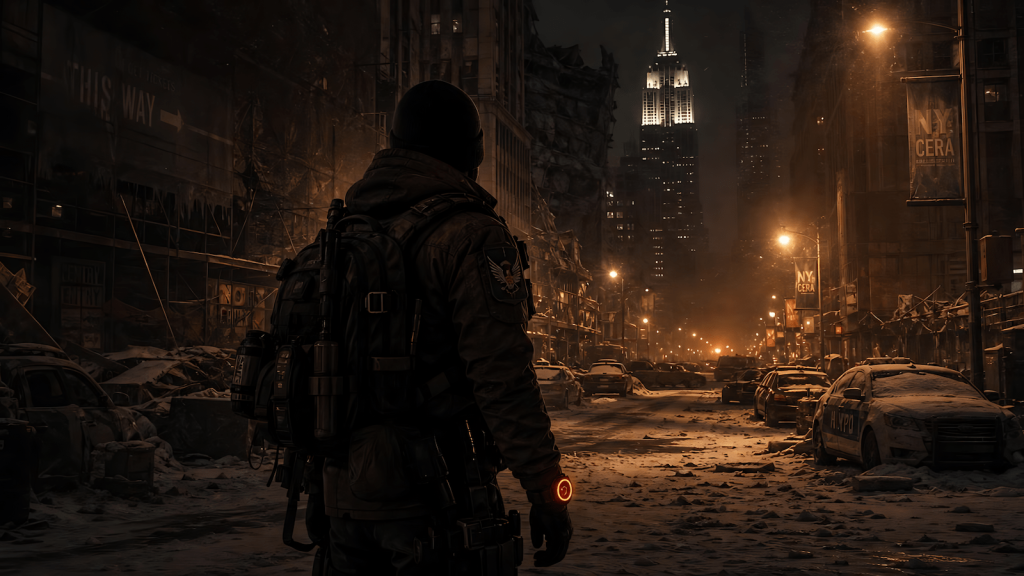
New York in Tom Clancy’s The Division isn’t a map. It’s a city in the process of dying and the difference is felt from the first block. The outbreak happened days ago. The collapse is still acute, still happening around me while I work. Every safe house I opened, every civilian group I passed huddled around a barrel fire, the world earned the SHD mandate because the need for it was visible everywhere I walked.
Playing it solo sharpened that further. No squad banter, no coordinated callouts. Just me, the city, and the weight of what I was supposed to be doing. The Dark Zone for the first time, no group, no safety net, no real understanding of what I was walking into, sat differently when I was the only one responsible for getting out. Extraction with contaminated gear, rogue agents who decided the mandate didn’t apply to them anymore, the constant awareness that nobody was coming if something went wrong. That’s a specific kind of tension that a squad dilutes just by existing.
The Underground took that further in a different direction. Tunnels, procedural layouts, no way to know what the next room held. Then at the end of a run, the Hunters appeared. No briefing. No warning that something like them existed in the game at all. I was finishing a mission, I thought I knew what was left, and suddenly something was there that moved differently, fought differently, and was clearly built to hunt me specifically. Solo meant I figured it out alone or I didn’t. That encounter only surprises you once. The second time you know what they are. The third time you have a build for them. The first time you’re just an agent who walked into something the game never told you was coming.
Survival put me in a storm with no gear and the clock running. Each of those modes stacked the same premise higher from a different angle.
Why I Never Went Back to Division 1
The first playthrough is the artifact. I finished Division 1 and closed it deliberately, not because it wasn’t worth more time but because more time would cost something. The Dark Zone solo, the Underground, Survival, the Hunters at mission end with no warning, those exist in a specific state in memory that a second playthrough would overwrite. The fear the Hunters generated that first time is gone the moment I know they’re coming. Survival only surprises me once. The atmosphere of a city in acute collapse only lands before I know how it ends.
Some games I protect by not returning to them. Division 1 is one of those. It’s a closed book and that’s not a criticism. It’s an honest accounting of what the first playthrough gave me and the decision not to trade it for a cleaner completion record.
What Division 2 Traded and What It Kept
Tom Clancy’s The Division 2 – Seven months later, Washington D.C. The premise is the same, sleeper agent, Directive 51, outranking every institution left standing, but the acute phase is over. Society didn’t just collapse. It collapsed and started reorganizing into factions. The world isn’t dying anymore. It’s already dead and now it’s political. That’s a different story and Division 2 actually builds a solid one around it.
The base campaign earns its complexity. Schaeffer and Black Tusk as the invading force, D.C. being reclaimed district by district, the Capitol building as a mission objective. The setting earns the SHD mandate in a different way from Division 1. Not through dread and collapse but through the sheer scope of what it actually takes to hold a government together when it’s already fallen.
WONY is where it gets both better and more complicated. You hunt Keener, you kill him, and his dying act is activating the Rogue Network through his watch. That’s a strong ending for the franchise’s best antagonist. The SHD level system kicks in after, the paragon progression that replaces the level cap, and rogues start appearing in the open world, not just the Dark Zone. Keener’s death changed the rules of the world and you feel it in how the game operates afterward.
The Manhunts are where Division 2 earns its story beats properly. Jupiter’s cell, Hornet’s cell, then Schaeffer himself becomes a manhunt target. The Hunters start unraveling a backstory that’s more disturbing than their mystery was. Sokolova emerges as the actual architect behind everything. The story keeps expanding the threat and most of it works, but the layers accumulate faster than they resolve. Each season answers one question by opening three more and after enough seasons the connective tissue starts fraying.
Then years later the revelation that Keener faked his death. That Faye Lau was working against Black Tusk from the inside the whole time. The clean ending WONY gave the Keener arc got pulled back and the franchise’s strongest antagonist became a reluctant asset. That’s the story decision that didn’t need to happen.
Battle for Brooklyn is where my patience ran out. Paid DLC. Theo Parnell, who I killed in Warlords, is back and now he’s one of the good guys. Hoskins is useless throughout. The Rat Queen reveal lands badly not because the setup is wrong but because the characters around it react like they’ve never encountered a betrayal before. Six hours of content built around a twist rather than a story, and I paid for it. Not the base game, not the Manhunts, not even the Schaeffer arc. Specifically Brooklyn.
If I’ve followed the franchise to mobile, the Division Resurgence review covers where the IP lands when the controller is gone. The short version: the premise survives the port. The input doesn’t.
Bullet Sponges and the Honest Difficulty
Heroic exists. Legendary exists. Both are clearable. But dumping a full 200-round mag into a person and watching them stay upright isn’t difficulty. It’s a number inflated past the point where it means anything. LMGs like the GR9 and Stoner carry that count legitimately. Certain AR builds with the right gearset get close. The rounds are real. The problem is what they’re hitting and how little it matters on the higher tiers.
The SHD fantasy is built on tactical competence. One agent with a mandate and the training to use it. A person absorbing a full magazine of rifle fire breaks that fantasy more completely than any story failure does. Hard mode is where Division 2 actually works for me. Kills feel proportional, engagements have consequence, and the tactical competence the premise promises is actually playable at that setting. It’s not a compromise. It’s knowing what the game is supposed to feel like and tuning it to match rather than chasing a difficulty tier that turns the whole thing into a damage spreadsheet.
The same instinct that keeps me playing games like Sleeping Dogs well past their obvious run time applies here. I stay because the world holds even when specific systems don’t deliver. The bones are good enough to keep running the loop.
The Premise Is Still Bigger Than Both Games
The SHD concept holds regardless of which game delivers it better. A classified unit embedded in civilian life, activated when every other option is exhausted, outranking any remaining federal authority with full operational autonomy. That idea doesn’t require great storytelling to hook people. The fantasy of being the last competent institution in a collapsed world is compelling on its own terms.
Division 1 presented it at the exact moment the presentation mattered most. Acute collapse, a city that needed the mandate to feel real, modes that kept finding new ways to put me alone inside that premise. Division 2 kept the mechanics, improved them significantly, and told a story that works in places and wastes itself in others. The Manhunts earned the premise. Brooklyn didn’t. The gear loop keeps me there regardless.
Division 1 is a closed book. Division 2 is where the loop still runs on Hard because the foundation holds even when the story stops earning it. Two honest relationships with the same franchise. Neither one cancels the other out.