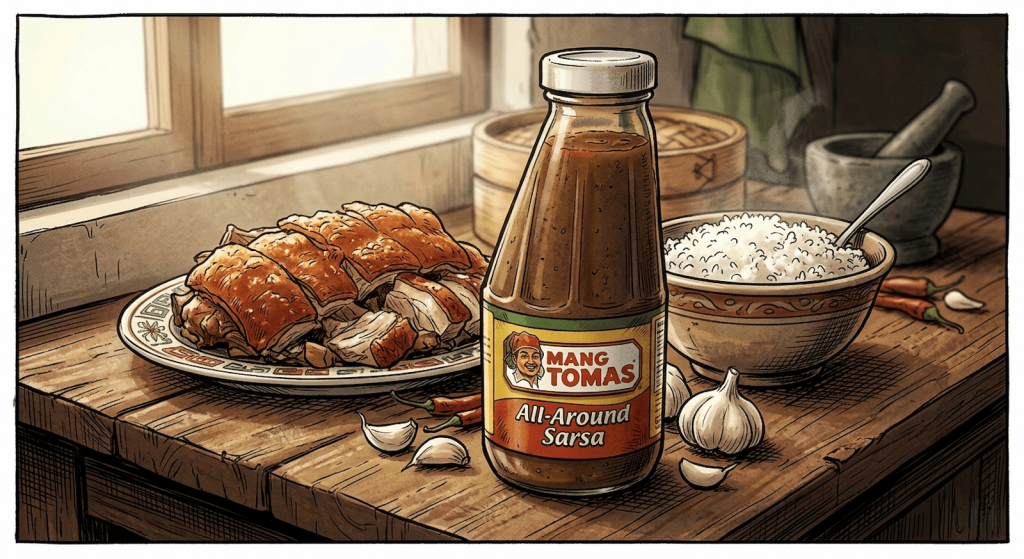
Some foods exist for one purpose. Others become tools. Mang Tomas belongs firmly in the second category. It was created as a sauce for lechon but that narrow description does not reflect how it actually gets used in real kitchens. Over time, it became something else entirely. It became a universal fixer for meals that need more body, more flavor, or a faster path to something satisfying.
Mang Tomas is widely labeled as lechon sauce, but in practice it behaves more like a kitchen multi-tool. It can rescue bland food, add depth to simple dishes, and turn leftovers into something worth eating again. That versatility is why the sauce has survived for decades in Filipino households and why it earned a reputation that goes far beyond its original purpose. The easiest way to describe it is this: Mang Tomas is the MacGyver of foods.
Why Certain Condiments Survive for Decades
Most pantry items disappear after a few years. Food trends move quickly, new sauces appear and fade just as fast, and shelf space is limited. Yet some condiments remain permanently embedded in kitchens because they solve real problems rather than just riding trends.
Mang Tomas sits in that category because it checks several practical boxes at once. It is inexpensive, shelf stable, widely available, and powerful enough to change the character of a meal with just a spoonful. These traits matter more than branding or clever marketing ever could. People do not keep a condiment around for nostalgia alone. They keep it because it works, and it keeps working every time they reach for it.
A sauce that can transform a plain dish into something richer will always find a place in the pantry. That logic explains why Mang Tomas became common even outside of the lechon context it was originally built for, spreading into weeknight cooking, emergency meals, and everyday rice pairings that have nothing to do with a roast.
What Mang Tomas Actually Does Well
Understanding why Mang Tomas became so widely used requires looking at what it actually contributes to food. It is not simply a sweet sauce or a savory topping. It performs multiple roles at once, which is the real reason it stuck around.
First, it adds body. Many quick meals end up thin or watery when cooked in a hurry, and no one wants a sauce that slides off the food before it reaches the plate. Mang Tomas immediately thickens sauces and gravies, giving them a more satisfying texture that coats food properly and holds up well with rice. Second, it delivers concentrated flavor. The sauce combines sweetness, saltiness, and savory depth in a single ingredient, so instead of juggling several seasonings and hoping the balance comes out right, a cook can reach for one bottle and move on. Third, and most importantly for Filipino cooking, it improves rice pairing. In many Asian kitchens, the real test of a sauce is how well it works with rice, and Mang Tomas creates a consistency that clings to grains instead of pooling uselessly at the bottom of the plate.
These three qualities, body, concentrated flavor, and rice compatibility, explain why the sauce migrated so naturally beyond its original role.
Everyday Uses That Go Beyond Lechon
The official pairing of Mang Tomas is roasted pork, and that remains the most recognizable use. Lechon with Mang Tomas is a classic combination because the sauce balances the richness of roasted meat perfectly, cutting through the fat while adding its own layered sweetness and depth. It is the pairing the bottle was designed for, and it still earns that title.
However, everyday cooking rarely looks like a celebration feast. Most meals involve leftovers, quick frying, or simple dishes built around whatever is already in the kitchen. This is where Mang Tomas reveals its real value and why so many cooks have come to depend on it regardless of the occasion.
Fried meats often lose moisture and richness after cooling. A spoonful of Mang Tomas restores that richness and adds a thicker coating that brings the dish back to life. Plain grilled pork or leftover fried chicken can feel like a completely different meal once the sauce is added and warmed through. Another common scenario is the emergency meal, where rice, eggs, and whatever protein is on hand form the backbone of something quick. Mang Tomas provides a concentrated flavor boost that turns a simple plate into something far more satisfying without requiring any additional preparation.
Even the most basic combinations benefit from its presence. Rice with a fried egg becomes a proper meal when the sauce adds body and depth to what would otherwise be a plain breakfast plate. One specific example that comes up frequently is adobo. Traditional adobo can vary widely in thickness depending on how long it reduces, and some cooks add a small amount of Mang Tomas to build body quickly and deepen the sauce without losing the core flavor profile. It does not replace the vinegar, soy sauce, or garlic that define the dish. It simply reinforces what is already there.
Why Multi-Use Ingredients Matter in the Kitchen
The popularity of Mang Tomas reflects a deeper reality about everyday cooking that does not get discussed enough. Most people do not want a pantry full of specialized sauces that each serve one narrow purpose. Too many single-use ingredients create friction, not just in terms of storage space but in the mental load of deciding what to reach for.
Multi-use ingredients reduce that friction significantly. One bottle that performs several roles simplifies decision making during cooking, especially on weeknights when energy is low and the goal is just getting food on the table. Instead of adjusting sweetness, salt, and thickness separately with multiple ingredients, a cook can apply one ingredient that handles all three at once. This efficiency explains why certain condiments spread so widely across cultures and cuisines. Soy sauce, fish sauce, and Worcestershire sauce all occupy similar positions in their respective kitchens, and Mang Tomas fills that same role in Filipino cooking. Versatility is the reason these sauces survive for decades while more specialized products disappear from shelves.
When a Sauce Becomes a Household Staple
The true strength of Mang Tomas became obvious when it temporarily disappeared from shelves. In 2024, imports of several Filipino sauces into the United States were temporarily restricted while manufacturers adjusted ingredient compliance with U.S. food regulations. Mang Tomas was among the products affected, and the reaction from consumers told a clear story.
The shortage was noticeable almost immediately in Filipino grocery stores, and the people looking for it were not reacting to the loss of a specialty item they used once or twice a year. They were reacting to the loss of something they reached for constantly, sometimes several times a week. That response revealed how deeply the sauce had embedded itself in everyday cooking. When a pantry item disappears and people scramble to find it or pay inflated prices for remaining stock, that is a sign of dependency built through years of genuine usefulness, not habit or nostalgia.
The MacGyver Logic Applied to the Pantry
MacGyver became famous for solving problems with whatever simple tools were available, using them in ways their designers never intended. The same philosophy applies to food and the ingredients we choose to keep around. A truly useful ingredient is not limited by its original purpose. It adapts to whatever situation the kitchen presents, and it keeps proving its value across different meals, different cooks, and different circumstances.
Mang Tomas fits that definition precisely. It started as a sauce for lechon, but over time it evolved into something more flexible and more reliable. It became a solution for meals that needed help, a shortcut for cooks who needed body and flavor fast, and a staple that earned its place on the shelf through repeated usefulness rather than marketing or tradition alone.
That is why the bottle remains in so many kitchens across the Philippines and in Filipino homes around the world. Not because tradition demands it, but because the sauce keeps proving its value every time someone opens the refrigerator and needs to make something work.
Mang Tomas is not just a condiment. It is a tool.

Grew up in a kitchen where Mang Tomas was always within arm’s reach not just for lechon, but for everything that needed fixing. Believes the best tools are the ones that outlast their original purpose, whether that’s a sauce bottle, aging hardware, or a process that just keeps working.
Runs HobbyEngineered, where hobbies are judged by engagement, durability, and craft not convenience, trends, or influencer shortcuts.
Also writes about QA systems at QA Journey and cuts through AI hype at Engineered AI.
Same engineer mindset, different tools.