Some links on this page are Amazon affiliate links. If you choose to buy through them, HobbyEngineered may earn a small commission at no extra cost to you.
These links only appear where tools or everyday support items naturally fit the topic. No sponsored placements. No hype.
I’ve been building go bags long before I called them that. It wasn’t panic. It wasn’t disaster fantasy. It was just how my brain worked.
The idea started way before games made it look cool.
Where It Actually Started
I was a Boy Scout. The motto stuck with me: Laging Handa. Always prepared. Every situation, a scout is trained for it. We were the civilian version of an army scout. Light. Agile. Mobile. That’s what scouts do.
But the real template came from my father.
He kept a bag in the car. Not a bug-out bag. Not some tactical fantasy. Just a practical setup that made life easier.
Inside: spare clothes for him and my mom. Maybe something for us kids. Towels. Shirts. A med kit. Glow sticks. Water filtration tumblers. Emergency lights. Tire repair kit. Tool sets. And a Rambo knife. That’s where I got the idea for the kukri I carry now.
This wasn’t survival gear. This was convenience engineering.
My parents could decide after breakfast at McDonald’s to drive to Laguna and go swimming. No planning. No packing. The bag was already there. That convenience, that utility, that’s what made sense to me.
When I got my first car, my dad gave me a Craftsman toolbag. Not the tools. The bag. The system. That gift said more than any lecture could. Organization matters. Preparedness isn’t paranoia. It’s just removing friction before it becomes a problem.
Growing up, I packed individual bags for field trips. For province visits to see cousins, aunts, uncles, grandparents. The habit formed early. Pack smart. Carry what you need. Don’t assume someone else will have it.
Then Games Gave It an Aesthetic
The Division didn’t create this hobby. It validated it.
Before that game, the only visual reference I had for “prepared and mobile” was mountaineer backpacks. Functional, but not the look I wanted.
The Division showed me sling backpacks, agent loadouts, tactical organization that still looked like something a person would actually wear in a city. Not military surplus. Not tacticool cosplay. Just functional gear that worked.
What stuck wasn’t the shooting. It was the loadouts. The constraints. You move with what you carry. You plan before you leave. You accept tradeoffs. You adapt when the rules change.
That mental model transferred directly to real life.
Then COVID Made It Real
No zombies. No collapse. Just checkpoints everywhere.
Metro Manila locked down hard. Movement restrictions. Food scarcity. Rules changing week to week. Temperature checks every few hundred meters. Questioning at every checkpoint. Where are you going. Why are you out. How long will you be gone.
We weren’t suffering. We had a house. Space. Internet. Comfort. But food was scarce. Premium items disappeared. Timing mattered. Movement mattered.
I became the one doing supply runs. I used a bike with post-apocalyptic style saddles and bags. I had a go bag with food, water, change of clothes, spare masks, sanitizers.
And I carried a kukri. Hidden in the bag.
Not for hunting. Not for fantasizing. For utility. A machete would stick out and get me flagged by military. A hatchet was hard to find. Itak or bolo would draw attention in the city center. The kukri was big enough to be useful, small enough to conceal.
It wasn’t a fall of the city. It was a lockdown. But the bags adapted. Items rotated. Some stayed. Some got removed. It wasn’t dramatic. It was practical.
The Division aesthetic became real. Just without ISAC.
Why Multiple Bags
I never built one perfect bag. That idea never made sense.
Life doesn’t happen in one mode. A mall is different from a road trip. A road trip is different from biking. Biking is different from lockdowns. Lockdowns are different from normal days where everything pretends to be stable.
So I ended up with multiple bags. They overlap. They steal from each other. Items move around. Some things stay for years. Some things get thrown out after a month because they proved to be dead weight.
That iteration is the fun part.
Each bag solves a different class of problems. The engineering is figuring out what problems each scenario generates, then building the minimal loadout that handles them without excess weight.
The Everyday Carry Bag
This bag is boring by design. It goes out the most, so it deals with the dumbest problems. Dumb problems spiral fastest if you ignore them.
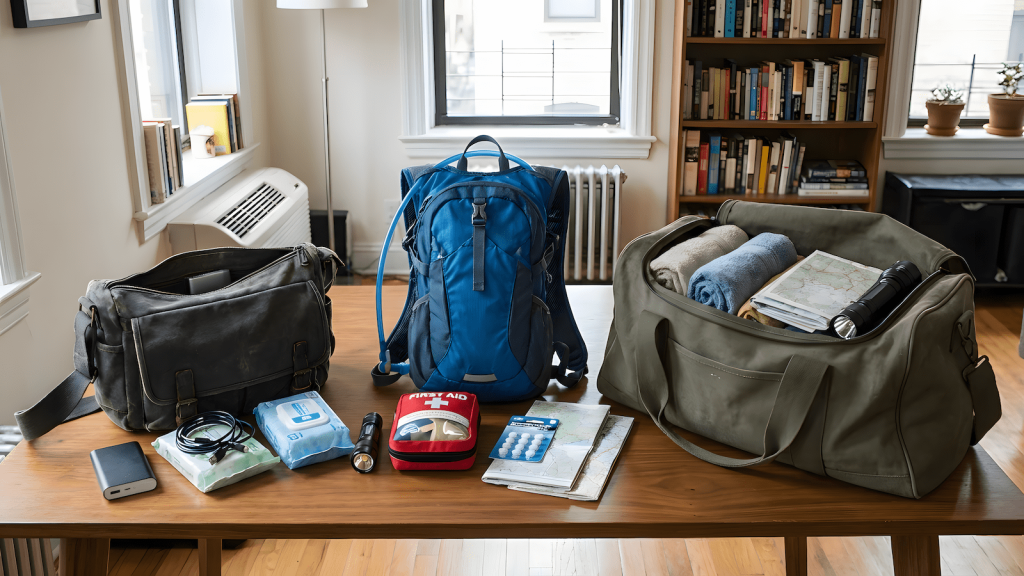
Powerbank. Phones die. When phones die, coordination dies with them. That’s not dramatic. That’s just how it works. 20,000mAh minimum. Solar charging models extend range because sun is usually available. Outlets aren’t.
Charging cables. Cables disappear. They migrate. You don’t question it. You just carry extras. USB-C, Lightning, Micro-USB. Whatever your devices need.
Wipes. Kids exist. Food spills. Hands get gross. Bathrooms are sometimes unusable. None of that waits for the perfect moment.
Utility knife. Packaging. Tape. Loose threads. Broken straps. Small annoyances show up constantly. Quiet fixes prevent irritation from turning into stupid decisions.
Nothing in that bag is exciting. That’s why it earns its place.
The Mall and Public Spaces
When we go to the mall, I don’t change the bag. I change how I think.
I always pick a meetup point the moment we enter. Every time. If phones die or get lost, nobody panics. Nobody searches blindly. Everyone already knows where to go.
That habit didn’t come from paranoia. It came from seeing phones fail once and deciding I didn’t want to deal with that chaos again.
The everyday bag handles the rest. Powerbank for dead devices. Wipes for spills. Utility knife for broken shopping bags or packaging that won’t open. Small fixes that keep the day moving.
The Outdoor and Travel Bag
This bag assumes movement and discomfort. Not disaster. Just friction.
Water. Hydration pack or large bottles. Water comes first. Always. Dehydration kills judgment fast. You don’t negotiate with thirst.
Water purification. Bottles run out. Water purification tablets or a filtration tumbler extend range without adding much weight. Sun might be available. Clean water sources might not be.
First aid kit. Skin always loses eventually. Scrapes. Cuts. Road rash. Blisters. It’s never dramatic. It’s just annoying if you’re unprepared. Bandages. Antiseptic. Pain relievers. Basics.
Towel or spare shirt. Sweat doesn’t negotiate. Rain doesn’t ask permission. Dry fabric matters more than you think until you don’t have it.
Food. Dense. Portable. Doesn’t care if it gets warm. Peanut butter. Honey. Bread. Hunger makes people stupid and angry. I’d rather remove that variable early. For ideas on balancing calories with practicality on the trail, see portable calories vs perfect meals.
The Car Trunk Bag
This one lives in the trunk. This one shut up every skeptic without saying a word.
Spare clothes for adults and kids. Extra socks and underwear. Towels. A proper first aid kit. Flashlights. Paper maps. Small comfort items for children. Emergency lights. Tire repair kit. Basic tool set.
My daughter threw up once. Extra clothes mattered.
A trip got delayed overnight. Towels mattered.
Traffic locked down during COVID. Everything mattered.
This bag didn’t feel cool. It just worked. Repeatedly.
My father had this figured out decades ago. I’m just continuing the system.
The Engineering Part
This hobby works because my brain is always in engineering mode. I can’t turn it off.
At work, that’s exhausting. Everything is optimize, debug, improve. Mistakes have consequences. Deadlines exist. Every decision carries weight.
But when engineering synchronizes with something I love, downtime becomes playtime.
I’m still optimizing. Still iterating. Still testing. But now it’s relaxing instead of draining. No bad real-world output. No consequences for experimenting. Just the satisfaction of making something work better.
Games do this too. Visual relaxation. Low stakes. High engagement. You die in the game, you restart. You don’t get the gear, you try again.
But games get boring. Keep winning, boring. Keep losing, also boring. Fixed scenarios become repetitive.
Go bags never get boring because real-world variables keep changing. Scenarios evolve. COVID proved that. New gear and tools keep emerging. Each bag solves different problems. The iteration never stops.
The Iteration Loop
The bags are never finished.
When I realize I needed something I didn’t have, it gets added for next time. When something proves useless, it gets removed. When something fits its purpose, it stays.
That loop is the hobby.
Items rotate between bags. A powerbank that lived in the everyday bag might move to the car bag if I realize I need redundancy. A first aid kit that sat unused in the outdoor bag might get simplified and moved to the trunk.
The system adapts. The bags steal from each other. Nothing is permanent except the process.
Why This Matters
I don’t think of this as prepping for the end of the world. That’s a different hobby.
This is systems thinking with physical objects. Operating under constraints. Resource management. Loadouts and tradeoffs. Planning before movement. Adapting when rules change. Staying calm while variables shift.
Same mindset as work. Same mindset as games. Just applied to real life with bags and gear.
The bags exist because life generates friction. Small problems that spiral if ignored. Phones that die. Kids that spill. Trips that extend. Emergencies that happen. Rules that change.
I don’t wait for the problem to arrive. I carry the solution before it’s needed.
Better to have it and not need it than need it and not have it.
That was Boy Scouts. That was my father. That’s still true.
What’s in the Bags Now
The contents shift. But the principles stay.
Power matters. Phones don’t last forever. Powerbanks stay. Solar charging models stay longer.
Water matters. Bottles run out. Purification extends range. Filtration tumblers work indefinitely if maintained.
First aid matters. Skin loses. Cuts happen. Bandages and antiseptic earn their weight.
Utility matters. Small problems need small tools. Utility knives. Multi-tools. Duct tape. Zip ties. Items that solve entire classes of problems without specialization.
Comfort matters. Towels. Spare clothes. Socks. Wipes. Small things that prevent discomfort from becoming misery.
Nothing dramatic. Nothing tactical. Just engineering applied to daily life.
The Bags Keep Building
I don’t need to explain it. I don’t need to justify it.
The bags work. They’ve worked for decades. They worked during COVID. They’ll work during whatever comes next.
The hobby isn’t about the gear. It’s about the iteration. The testing. The refinement. The satisfaction of building systems that remove friction before it becomes a problem.
My father had it right. The Boy Scouts had it right. The Division gave it an aesthetic. COVID stress-tested it.
Now I just keep building.